Performance Optimization and Co-Design of Lighthouse Plasma Simulation Codes for Exascale Systems
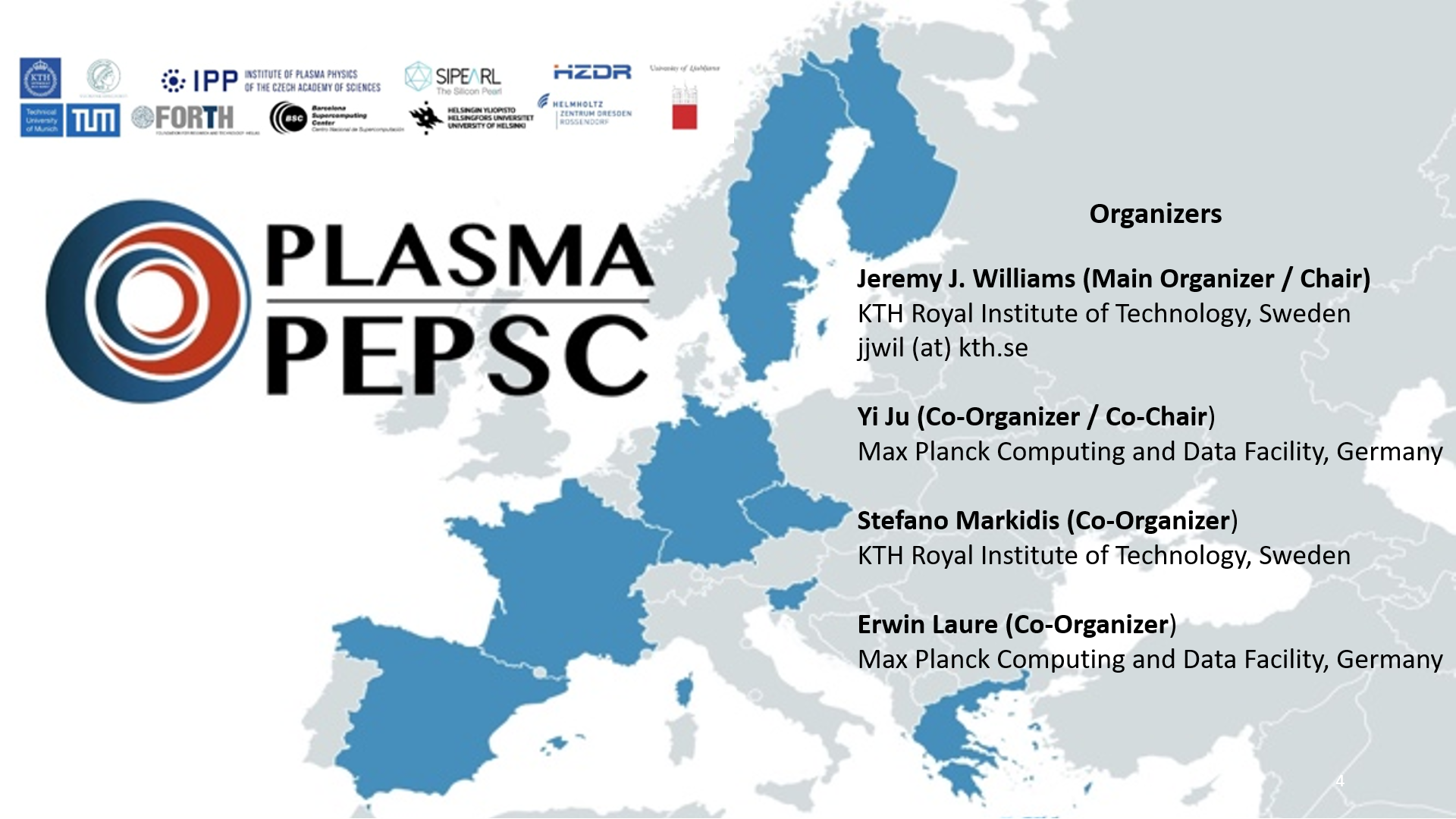
This full day minisymposium brings together leading plasma physics code developers and high performance computing (HPC) researchers to discuss how lighthouse plasma simulation codes can be efficiently prepared for today’s and tomorrow’s exascale supercomputers.
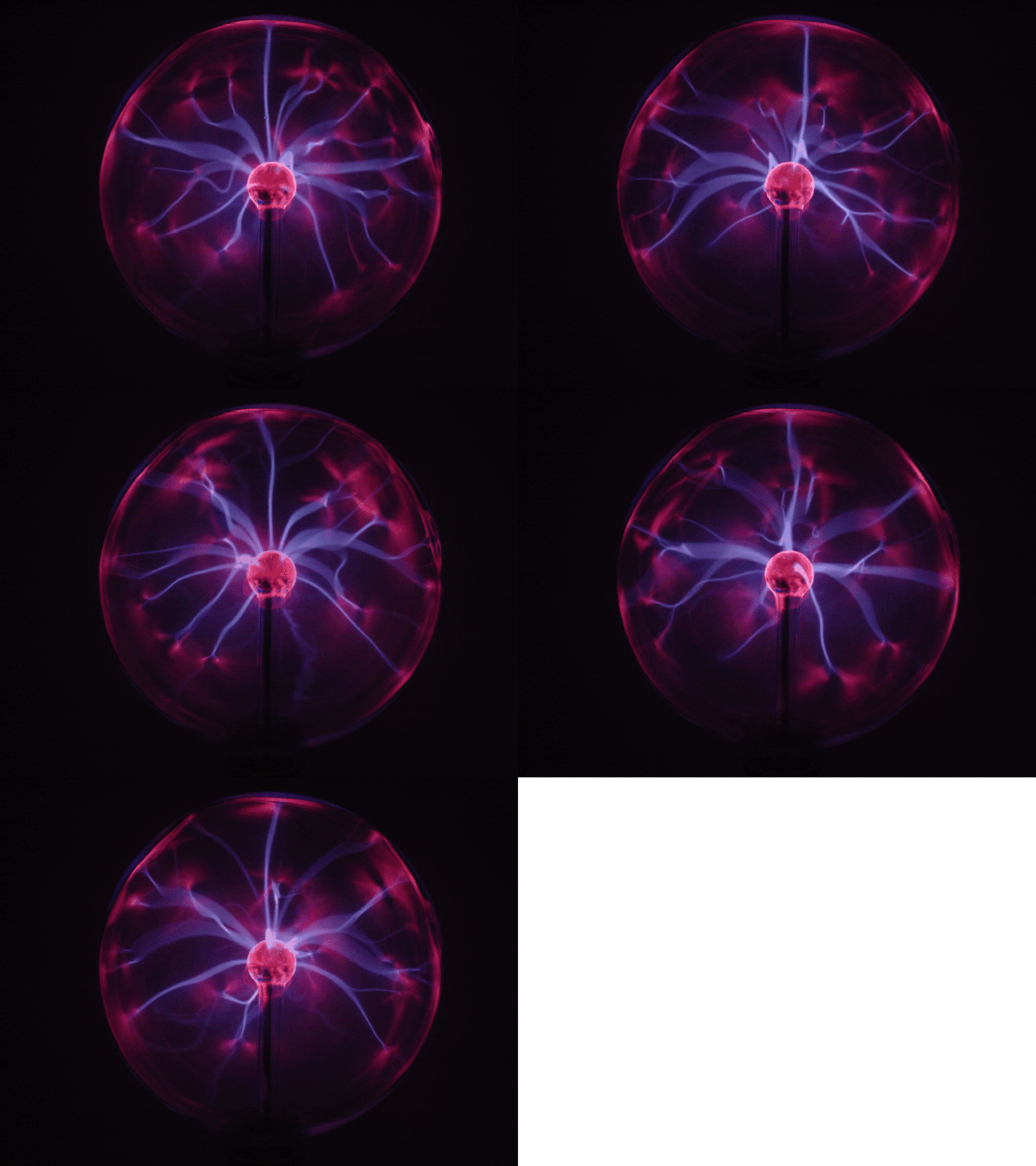
The event is closely aligned with the activities of the European Centre of Excellence Plasma-PEPSC and focuses on practical experiences in performance engineering, scalability analysis, heterogeneous programming and application system co-design.

Motivation and Scope
Exascale systems introduce unprecedented levels of architectural complexity, including massive parallelism, deep memory hierarchies, and accelerator-rich nodes. While plasma physics simulations are among the most demanding scientific workloads, many production codes still face major challenges in performance portability, load imbalance, memory efficiency and data movement.
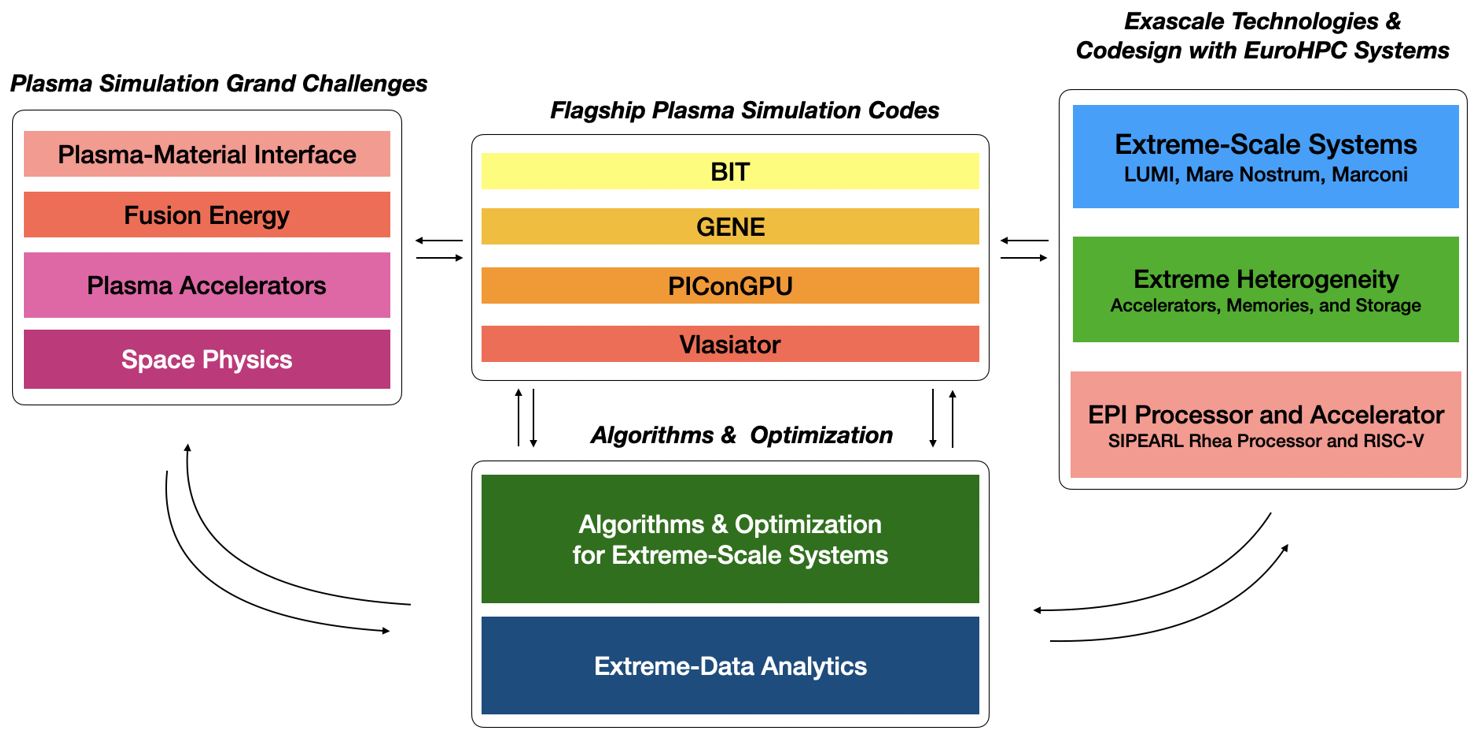
This minisymposium addresses these challenges by presenting:
- performance engineering and scalability studies of flagship plasma simulation codes,
- algorithmic and software optimizations such as vectorization, load balancing, and mixed-precision strategies,
- heterogeneous programming approaches,
- advanced runtime and memory management techniques,
- in-situ and online analysis workflows to reduce I/O and data-movement costs,
- application system co-design experiences targeting current and upcoming exascale platforms.
Target Audience
- PhD students, postdocs, industry engineers
- HPC application developers and performance engineers
- Computer scientists working on high-performance computing and exascale systems
- Plasma physicists and domain scientists developing and using large-scale simulation codes
- System researchers interested in application-driven co-design
Minisymposium Agenda (Full Day – 25 August)
Welcome & Logistics (09:00–09:10)
Keynote Speaker (09:10–09:50)
Elisabetta Boella (E4 Computer Engineering)
Her professional expertise lies at the intersection of high-performance computing and scientific applications, with research interests including numerical modelling, parallel programming, and hardware–software co-design for emerging architectures. She has extensive experience in the development and optimisation of large-scale parallel applications and is one of the main developers of ECsim, a massively parallel plasma simulation code. In addition, she has significant expertise in GPU programming and in porting legacy applications to heterogeneous computing architectures.
Semi-implicit PIC codes on current and next-generation supercomputers: lessons learned and future directions (30 mins) and Q & A (10 mins)
Morning Talks – BIT1 and PIConGPU (09:50–13:00)
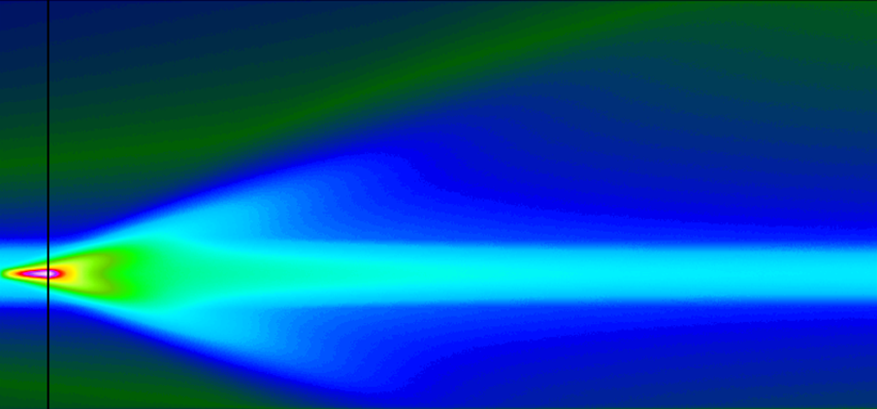
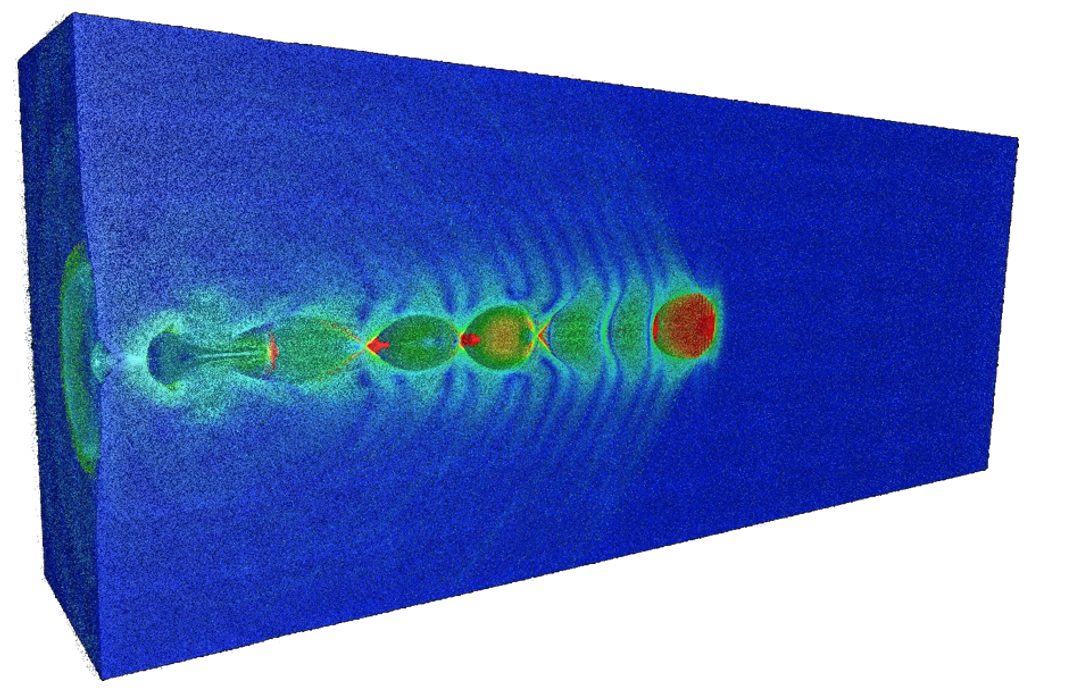
- David Tskhakaya (BIT1)
- Recent Developments & Updates of The BIT1 PIC MC Code (30 mins)
and Q & A (10 mins)
- Recent Developments & Updates of The BIT1 PIC MC Code (30 mins)
Coffee Break (10:30–11:00)
- Kallia Chronaki (BIT1)
- On the Vectorization of BIT1 for RISC-V and x86 Architectures (30 mins)
and Q & A (10 mins)
- On the Vectorization of BIT1 for RISC-V and x86 Architectures (30 mins)
- Michael Bussmann (PIConGPU)
- Simulating Matter under Extreme Conditions in the Exascale Era (30 mins)
and Q & A (10 mins)
- Simulating Matter under Extreme Conditions in the Exascale Era (30 mins)
- Julian Lenz (PIConGPU)
- mallocMC: Performant and Portable Many-Core Memory Allocation (30 mins) and Q & A (10 mins)
Lunch Break (13:00–14:00)
Afternoon Talks – GENE/GENE-X and Vlasiator (14:00–17:20)
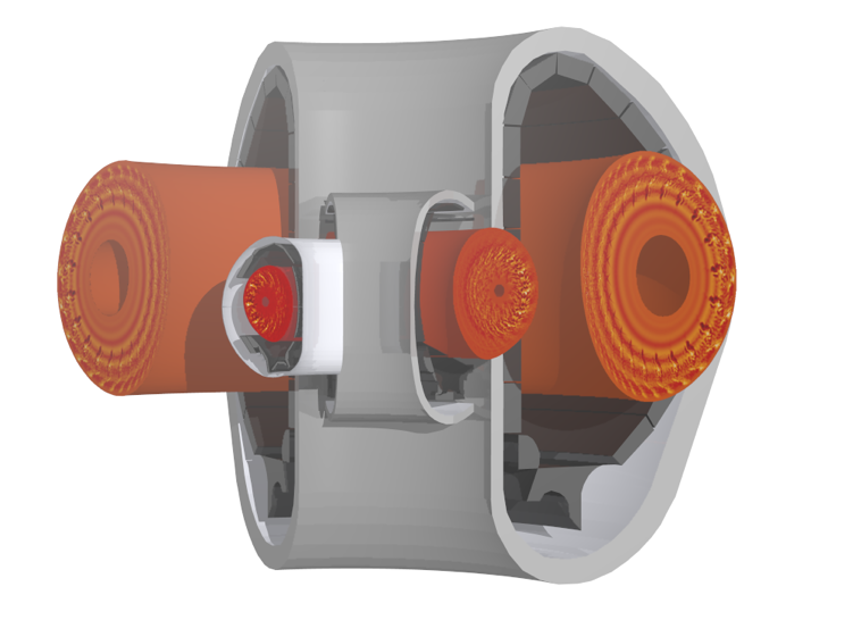
- Jordy Trilaksono and Mou Lin (GENE/GENE-X)
- Accelerating Gyrokinetic Turbulence Code on GPUs (40 mins)
and Q & A (10 mins)
- Accelerating Gyrokinetic Turbulence Code on GPUs (40 mins)
- Yi Ju (GENE/GENE-X)
- In-Situ Techniques for GENE-X (30 mins) and Q & A (10 mins)
Coffee Break (15:30–16:00)
- Urs Ganse (Vlasiator)
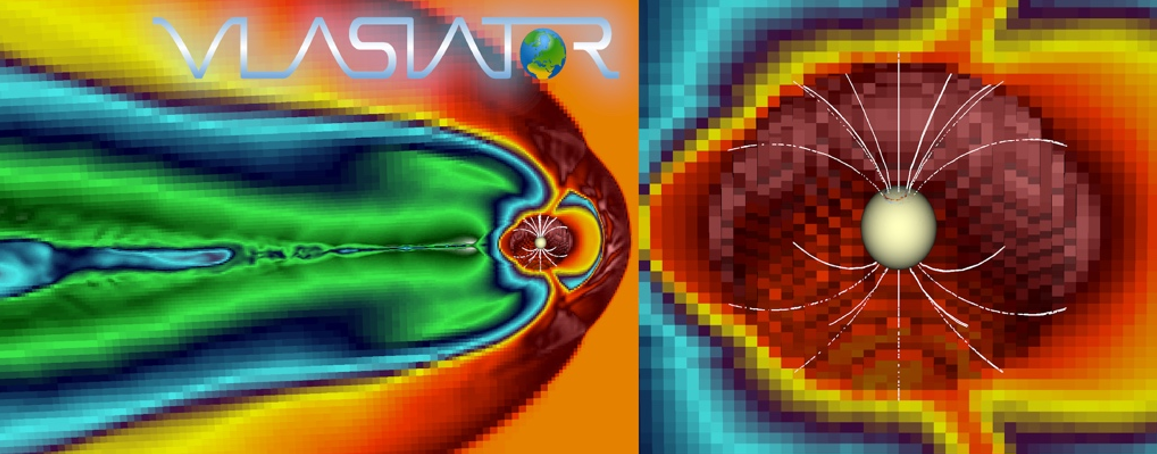
- Performance Engineering of a Highly Load-Imbalanced Hybrid-Vlasov Simulation at Scale (30 mins) and Q & A (10 mins)
- MPI Pancake: Improving Communication Overheads in Large-Scale Hybrid-Vlasov Simulations (30 mins) and Q & A (10 mins)
Discussion (17:20–17:50)
- All Codes (BIT1, PIConGPU, GENE/GENE-X and Vlasistor)
- Pushing Lighthouse Plasma Simulation Codes to Tackle Exascale-Enabled Grand Challenges (30 mins)
Wrap-Up & Closing Remarks (17:50–18:00)